
Photo Source: NJDOT Bicycle & Pedestrian Resource Center
Across New Jersey, communities are embracing faster, more flexible ways to make streets safer. Demonstration projects are short-term, low-cost installations that test street design changes. They have become a powerful tool for municipalities looking to improve safety, build public support, and accelerate long-term improvements. At the same time, a few cities and counties are exploring Rapid Response Programs, which deploy quick safety countermeasures immediately after a fatal or serious injury (FSI) crash or at locations identified through High Injury Network analysis.
While these two approaches may seem distinct, demonstration projects and Rapid Response Programs are interconnected. In fact, demonstration programs provide the foundation, materials, methods, community trust, and institutional know-how that Rapid Response Programs need to succeed.

A bike corral near a crosswalk in Asbury Park, NJ uses low-cost materials, such as flex-posts and temporary curbs, to restrict illegal parking within 25 feet of the crosswalk, increasing visibility for vehicles and people crossing. (Source: NJDOT Bicycle & Pedestrian Resource Center)
Why Demonstration Projects Matter
Demonstration projects are the “planning-by-doing” arm of Complete Streets. They allow municipalities to test ideas in real time, gather speed and traffic data, solicit feedback, and refine designs before committing to permanent construction. These projects typically last from a single day to a few weeks and rely on inexpensive, movable materials such as paint, cones, bollards, planters, and signage.
Demonstration projects also serve as powerful public engagement tools. They help residents experience proposed changes rather than imagine them on a plan sheet. Surveys, user counts, and speed studies collected before, during, and after demonstrations help municipalities evaluate effectiveness and build support for permanent improvements.
The Rise of Rapid Response Programs
Rapid Response Programs take the core principles of tactical urbanism—speed, flexibility, and community-centered design—and apply them to crash response. Instead of waiting years for capital projects to advance, Rapid Response teams deploy safety fixes within months, weeks, or days of an FSI crash.
These programs are rooted in public health thinking: a uniform, timely response signals that safety is a shared priority and prevents the return to unsafe “normal” conditions. Treatments often include:
- Paint and post curb extensions
- Modular speed cushions
- Temporary signage
- Protected bike lane elements
- High visibility crosswalks
Cities like Denver, Hoboken, and Jersey City have already shown how effective rapid interventions can be. Denver’s Rapid Response team has recommended more than 50 quick safety changes since 2020, and some locations have seen crash reductions of more than 30%.
New Jersey Programs that Advance Rapid Response
In New Jersey, there are programs and resources available from two regional metropolitan planning organizations (MPOs). The North Jersey Transportation Planning Authority (NJTPA) and South Jersey Transportation Planning Organization (SJTPO) both offer Complete Streets Technical Assistance (CSTA) programs, providing municipalities with the knowledge, skills and resources to develop Complete Streets-related solutions. The programs, which include free training, technical assistance, and use of a demonstration materials lending library, are available to New Jersey municipalities within either the NJTPA or SJTPO region.
NJTPA and SJTPO’s demonstration libraries offer materials to all municipalities in New Jersey to help familiarize communities with the importance of demonstration projects. These demonstration libraries provide tools and temporary materials, such as paint, stencils, signs, tape, temporary traffic control devices, and more. They also provide basic demonstration project concept review and assistance to municipalities to support the project’s design and success.
How Demonstration Programs Support Rapid Response Programs
- They Build the Toolkit and Technical Know-How
Demonstration libraries provide the materials Rapid Response teams need, including bollards, cones, paint, stencils, and signage. Municipalities that have already used these materials in demonstrations know how to deploy them quickly and effectively.
Demonstration projects also build staff familiarity with tactical urbanism methods, like installation logistics and maintenance planning.
- They Normalize Quick, Temporary Safety Fixes
Demonstration projects help communities understand that temporary materials are legitimate tools. Residents can witness demonstrations that are neither “cheap” nor “unprofessional,” but part of a proven, iterative design process. When residents have already seen bike lanes or curb extensions installed temporarily, they are more likely to understand similar treatments deployed after a crash. This cultural shift is critical. Rapid Response Programs depend on public acceptance of quick, visible changes.
- They Strengthen Community Trust and Engagement
Demonstration projects are participatory and offer a meaningful tool for public engagement. They invite residents to experience possible changes to the street environment; the community will try the concept out—walk through a new crosswalk, bike in a temporary lane, or sit in a pop‑up plaza—and provide their feedback on if and how it makes the location safer. In Belleville, in Essex County, a demonstration project painted a mural near the middle school to increase attention and reduce speeds. The mural was designed by a local artist, and the high school art club painted the installation, tying the project back to the community it serves.
Surveys and outreach materials collect feedback early on in the demonstration period to ensure community voices shape the final outcome. Rapid response efforts rely on a local sense of trust so the response may move quickly to install temporary features. Residents are more receptive when they understand the purpose and benefits of interventions.
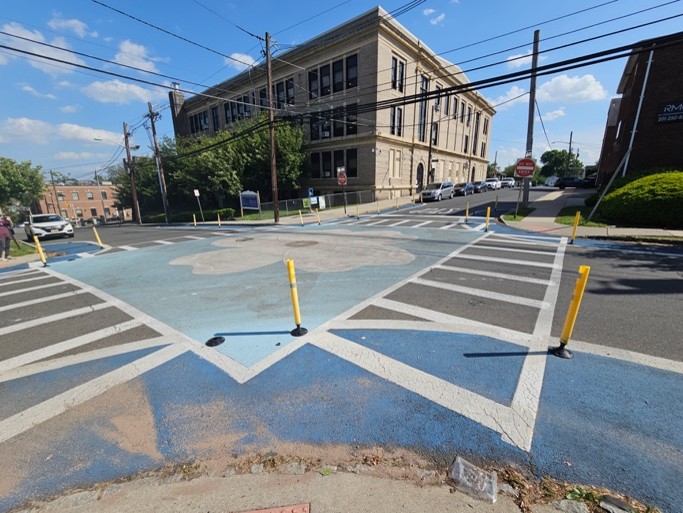
An intersection mural in Belleville, NJ created a more safer crossing environment for people walking near a school using only paint and flex-posts. (Source: NJDOT Bicycle & Pedestrian Resource Center)
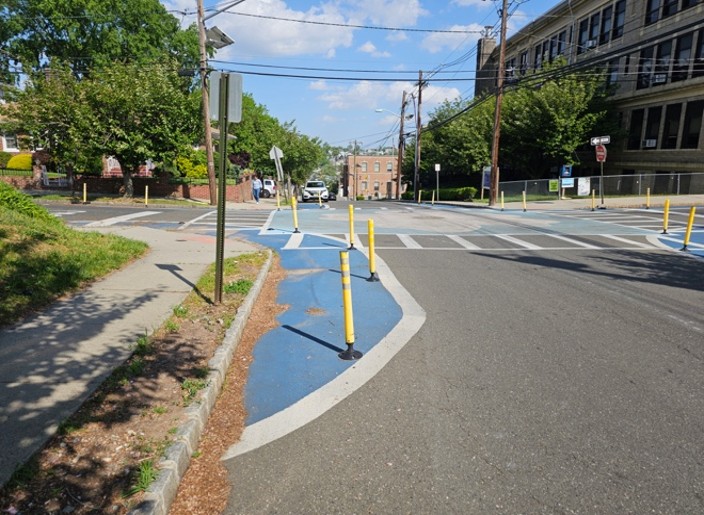
Temporary curb extensions in Belleville, NJ. The flex-posts reduce vehicle speeds and reduce the crossing distance for pedestrians. (Source: NJDOT Bicycle & Pedestrian Resource Center)
- They Provide Data to Guide Rapid Response Decisions
Demonstration projects can generate before and after data on speeds, volumes, and user behavior. This helps municipalities understand which treatments work best in different contexts.
Rapid Response Programs can draw on this evidence to select MUTCD-compliant and context-appropriate solutions based on local experience and data.
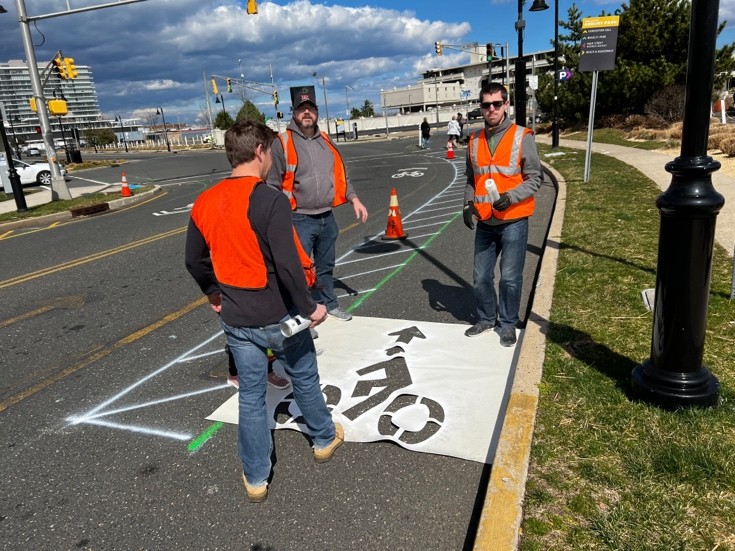
Students and an instructor from the Bloustein School at Rutgers install a temporary bike lane made from stencils and chalk in Asbury Park, NJ. Data gathered before and during the demonstration showed that the bike lane reduced vehicle speeds at the nearby intersection, reducing crash risk and increasing safety not only for bicyclists, but also pedestrians and people in vehicles. (Source: NJDOT Bicycle & Pedestrian Resource Center)
- They Build Institutional Capacity Across Agencies
Demonstration projects often involve partnerships with Transportation Management Associations (TMAs), community groups, consultants, and local businesses. These relationships create a network of collaborators who can support safety efforts. Municipalities like Hoboken and Jersey City have already shown how cross-departmental coordination between engineering, police, planning, and public health can make rapid interventions possible. Demonstration programs help cultivate this collaborative culture.
- They Create a Pipeline to Permanent Improvements
Demonstration projects test ideas. Rapid Response Programs set up the systems to deploy them quickly in response to fatal and serious injury crashes. Capital projects make them permanent.
Together, these approaches create a pathway to permanent safety improvements:

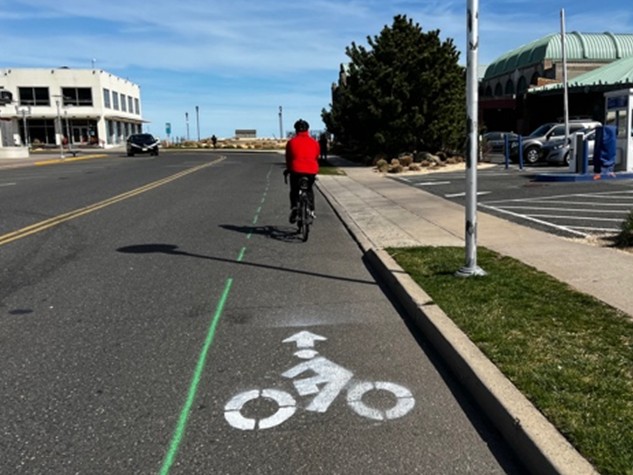
A temporary bike lane in Asbury Park, NJ. (Source: NJDOT Bicycle & Pedestrian Resource Center)

A permanent (right) bike lane in Asbury Park, NJ. (Source: NJDOT Bicycle & Pedestrian Resource Center)
This ensures that safety fixes are not only fast and effective but also lead to capital investment in permanent, durable, and data driven implementations.
A Stronger, Faster Path to Target Zero Goals
New Jersey set its Target Zero goal to eliminate all roadway fatalities and serious injuries in the state by 2040, and New Jersey municipalities and counties are increasingly adopting Vision Zero policies, task forces, and safety action plans. Rapid Response Programs complement these initiatives by providing another means of achieving safety goals in a shorter timeframe.
Demonstration programs provide the materials, methods, community engagement, and institutional readiness that make rapid interventions possible. They help municipalities move from planning to action, from ideas to implementation, and from reactive to proactive safety strategies.
By investing in demonstration programs and Rapid Response initiatives, New Jersey is building the foundation for an approach that can save lives tomorrow.